
How fast does a padel ball go? Smash speeds explained
 By James Carter · 12 November 2026 · 3 min read
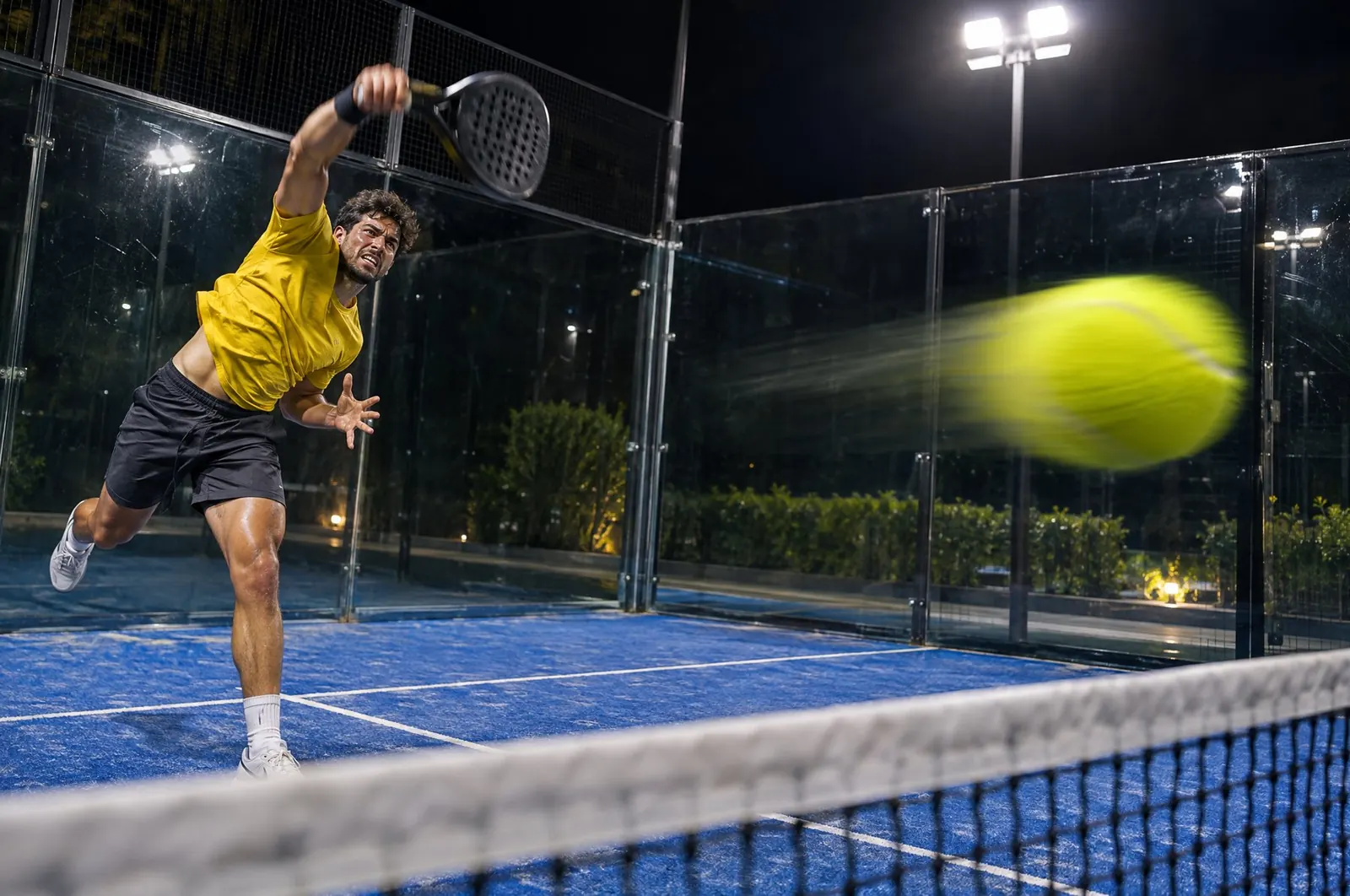
A hard padel smash travels at roughly 120 to 135 km/h. In a 2019 study, semi-professional players averaged about 133 km/h and amateurs about 125 km/h when smashing without an opponent, dropping to about 121 km/h and 105 km/h with an opponent across the net. Most shots in a rally are much slower, because padel rewards control over power.
What the research found
A study published in the journal Kinesiology in 2019 measured overhead smash speed in 14 semi-professional and 30 amateur padel players (Rivilla-García et al., 2019). The average ball speeds were:
- Semi-professional players: about 133 km/h without opposition and about 121 km/h with an opponent at the net.
- Amateur players: about 125 km/h without opposition and about 105 km/h with an opponent at the net.
Two things stand out. First, the gap between good amateurs and semi-professionals was smaller than many people expect. Second, both groups hit noticeably slower when an opponent was in front of them, because they had to aim and react rather than simply swing.
Why most padel shots are slower
The smash is the fastest shot in padel, but it is a small part of the game. Most rallies are built on lobs, volleys and controlled shots off the glass. The court is enclosed, so hitting harder often just sends the ball off the back wall and straight back to your opponents. That is why padel is often described as a game of patience and placement.
How padel compares with other racket sports
Padel balls have slightly lower pressure than tennis balls, rackets are solid rather than strung, and the serve is underarm. All of that keeps typical speeds lower than in tennis, where the fastest serves are recorded at well over 200 km/h. It is one reason padel is easier for beginners to rally in from their first session.
What makes a padel ball go faster
- Technique. A good overhead uses the legs, trunk and shoulder in sequence, with wrist pronation at the end. Our guide to wrist pronation explains it.
- Racket shape and balance. Diamond-shaped, head-heavy rackets generally give more power. Round rackets favour control.
- Ball pressure. New balls are livelier. As balls lose pressure they slow down and bounce lower.
- Temperature and altitude. Balls play faster in warm weather and at altitude, and slower in the cold.
- Grip pressure. A relaxed arm swings faster. See how tightly to grip a padel racket.
Does speed win points?
Not on its own. A fast smash that lands in the middle of the court can come off the back glass at a comfortable height for your opponents. Many points are won with a well-placed bandeja or víbora instead, which keeps you at the net. Speed matters most when you can hit the ball out of the court or into the gap between your opponents.
Speed is not everything. The kick smash wins points with spin rather than pace, and the official rules for padel balls explain why a padel ball plays slower than a tennis ball.
The bottom line
A hard padel smash travels at about 120 to 135 km/h, and amateurs are not far behind semi-professionals. But placement and patience win more points in padel than raw speed.
Related questions
What is the fastest shot in padel?
The smash. Measured smashes in research averaged around 125 to 133 km/h without an opponent in front of the player.
Is padel faster than tennis?
No. Padel balls have lower pressure, rackets are solid and the serve is underarm, so typical ball speeds are lower than in tennis.
Do new balls make padel faster?
Yes. New balls have more pressure and bounce higher and faster. They slow down as they lose pressure.