

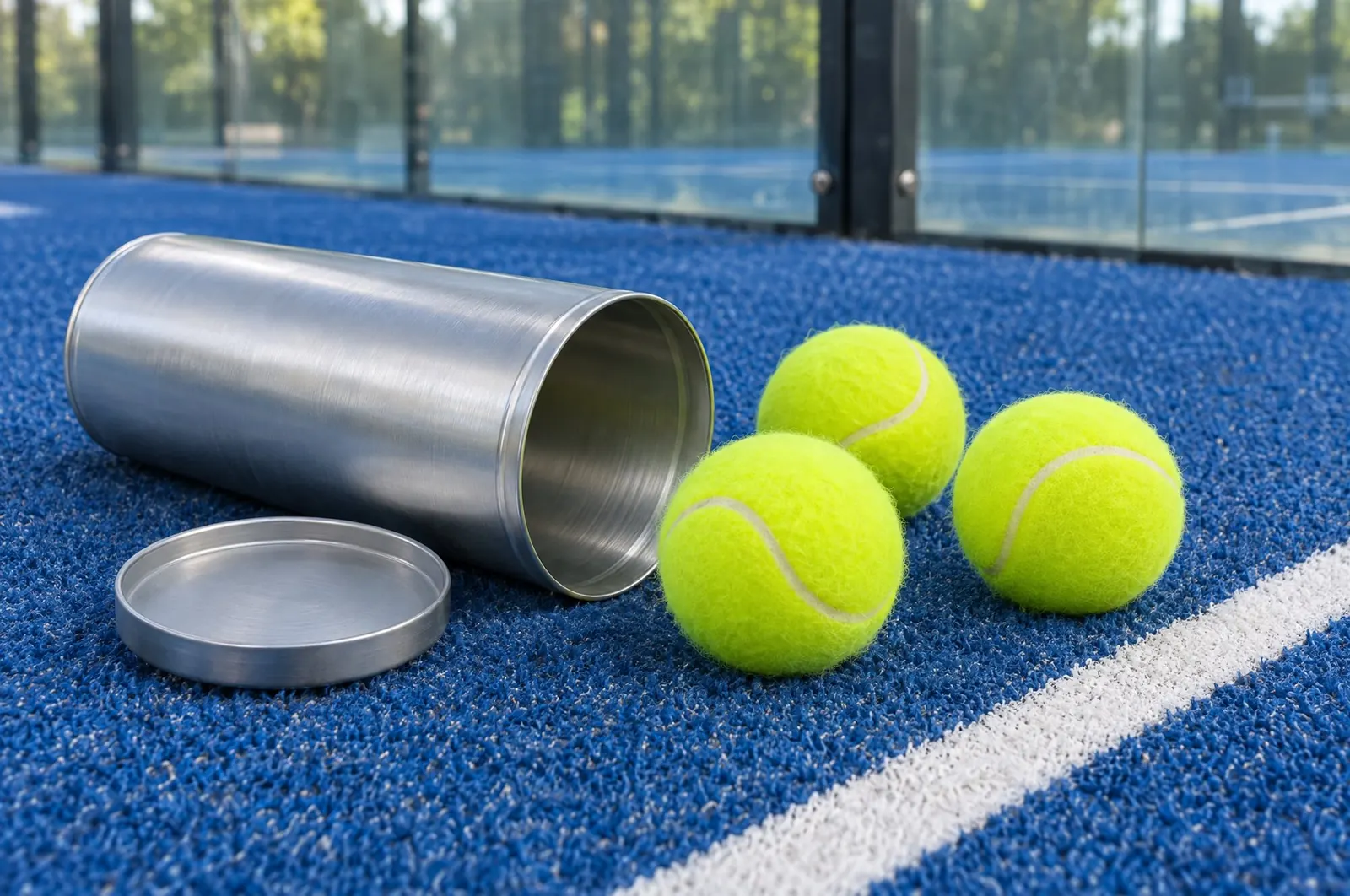
Under the FIP Rules of Padel, a ball must be a rubber sphere with a felt cover, 6.35 to 6.77 cm in diameter and 56.0 to 59.4 g in weight. Dropped from 2.54 metres, it must bounce between 135 and 145 cm. It can be white, yellow or another colour that stands out against the court, and official competitions must use FIP-approved balls.
The official specification
The FIP Rules of Padel set out these requirements:
- Material: a rubber sphere with an even outer cover of felt.
- Colour: white or yellow, or another colour that contrasts clearly with the court.
- Diameter: between 6.35 cm and 6.77 cm.
- Weight: between 56.0 g and 59.4 g.
- Bounce: between 135 cm and 145 cm when dropped onto a hard surface from 2.54 metres.
- Internal pressure: between 4.6 kg and 5.2 kg per 2.54 square centimetres.
Balls at altitude
At more than 1,000 metres above sea level, balls fly faster and bounce higher. The rules allow balls with a lower bounce at altitude, more than 121.92 cm but less than 135 cm, to keep the game playable. That will not affect anyone playing in the UK.
Competition rules
In official competitions, organisers must use balls approved by the FIP and announce the brand and type before the event. In club and social games, any decent padel ball is fine.
How padel balls differ from tennis balls
A padel ball looks almost identical to a tennis ball, but it has slightly lower pressure, so it is a little slower and bounces lower. That suits the smaller, enclosed court. Read the full comparison in padel ball versus tennis ball, and see are padel balls fuzzy for more on the felt.
Can you use tennis balls for padel?
For a casual knock-about, yes, but they bounce higher and play faster, which changes the game, especially off the glass. For proper games, use padel balls.
When should you replace padel balls?
Pressurised balls start to lose pressure as soon as the tube is opened. Most club players get a few sessions from a set before the balls feel flat and the bounce drops. Signs it is time for new ones:
- The ball bounces noticeably lower off the floor and glass.
- The felt is bald or fluffy.
- Rallies feel slow and heavy.
Many clubs sell or include balls with a booking. See do padel clubs provide rackets and balls. And if you want to know how much difference fresh balls make to pace, read how fast a padel ball goes.
The bottom line
A legal padel ball is 6.35 to 6.77 cm across, weighs 56 to 59.4 g and bounces 135 to 145 cm. For everyday games, buy proper padel balls and replace them once the bounce goes.
Related questions
Are padel balls smaller than tennis balls?
The size ranges are very similar. The main difference is that padel balls have lower internal pressure, so they bounce lower and play slightly slower.
What colour must a padel ball be?
White, yellow or another colour that contrasts clearly with the court. Yellow is by far the most common.
How many balls are used in a padel match?
Players usually play with a tube of three balls, and in competitions the organisers decide how often they are changed.