

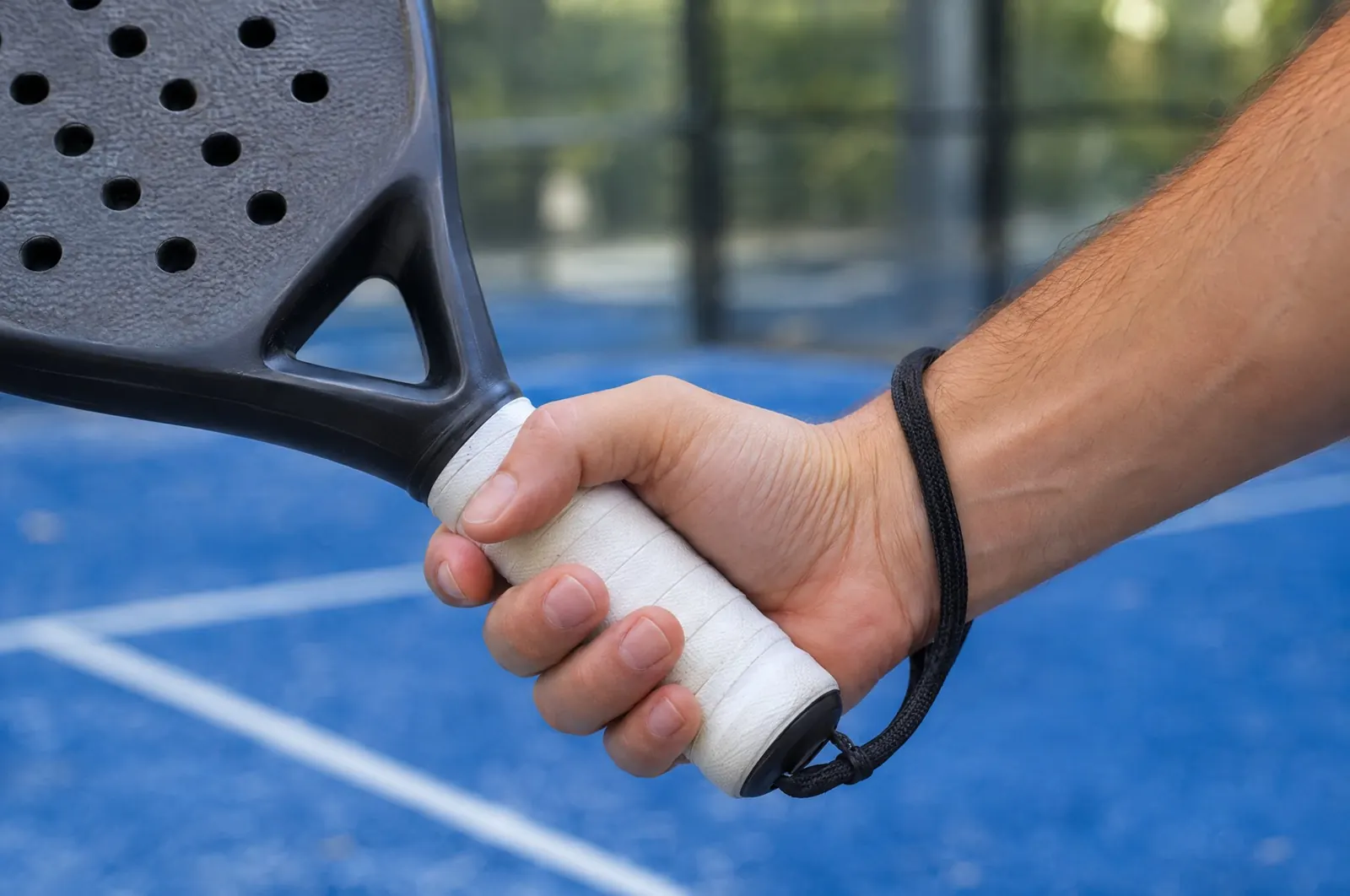
Grip your padel racket loosely, with just enough pressure to control it, and firm up briefly as you hit the ball. Many coaches describe it on a scale of one to ten: around three or four while you wait and prepare, rising for a moment at contact. Squeezing hard all the time costs you feel and puts extra strain on your forearm and elbow.
Why a relaxed grip works better
- More feel. A loose hand lets you sense the ball on the racket, which matters for soft shots such as the chiquita and the drop shot.
- More racket speed. A relaxed wrist and forearm let the racket accelerate through the ball. A tight grip slows the swing down.
- Less strain. Gripping hard for an entire match tires the forearm muscles and is often linked with elbow pain. Our guide to avoiding tennis elbow in padel explains more.
How much pressure to use
A simple way to think about it is a scale from one (barely holding the racket) to ten (squeezing as hard as you can):
- Waiting and preparing: around three or four. The racket should feel secure but you should be able to wiggle your fingers.
- At contact on groundstrokes and lobs: a brief increase, then relax again on the follow-through.
- Block volleys and fast exchanges at the net: a little firmer at contact, so the racket does not twist when a hard ball hits it.
- Soft shots and touch volleys: stay loose throughout so the racket absorbs pace.
These numbers are a guide rather than a rule. The aim is to stay relaxed between shots and only use extra pressure when you need it.
Which grip to use
Most padel coaches teach the continental grip, sometimes called the chopper grip, for almost every shot. Hold the racket as if you were holding a hammer, with the edge of the frame pointing forward. It lets you play forehands, backhands, volleys and overheads without changing your grip, which matters in a fast game.
Signs you are gripping too hard
- Your forearm feels tight or tired after a short time on court.
- Soft shots fly long because the racket does not absorb any pace.
- Your knuckles look white, or you find yourself clenching your jaw.
- You feel a sharp jolt up your arm when you hit the ball off centre.
Drills to relax your grip
- Mini rallies at the net. Play soft volleys with a partner while consciously keeping your grip at about three.
- Breathe out on contact. Exhaling as you hit helps your arm relax.
- Shake out between points. Loosen your fingers and wrist while you wait for the next serve.
- Check your equipment. A worn overgrip or a handle that is too thin makes people squeeze harder. A fresh overgrip often helps straight away.
Keep the wrist cord on
A relaxed grip is safe because padel rackets have a wrist cord, which the rules make compulsory. Wear it properly around your wrist. Our guide to racket and wrist cord rules covers what happens if you drop your racket.
Grip position matters as well as pressure, especially overhead. See what grip to use for a kick smash.
The bottom line
Hold the racket loosely, around three or four out of ten, and firm up only at contact. You will get more feel, more racket speed and less strain on your arm.
Related questions
What is the best grip for padel?
Most coaches teach the continental grip for nearly all padel shots, because it works for forehands, backhands, volleys and overheads without changing grip.
Can gripping the racket too tightly cause elbow pain?
Gripping hard for long periods tires the forearm muscles and is often linked with elbow problems. Keeping a relaxed grip is a simple way to reduce strain.
Should I grip tighter for a smash?
Briefly, at contact. Stay relaxed during the swing so the racket can accelerate, then firm up just as you hit the ball.