

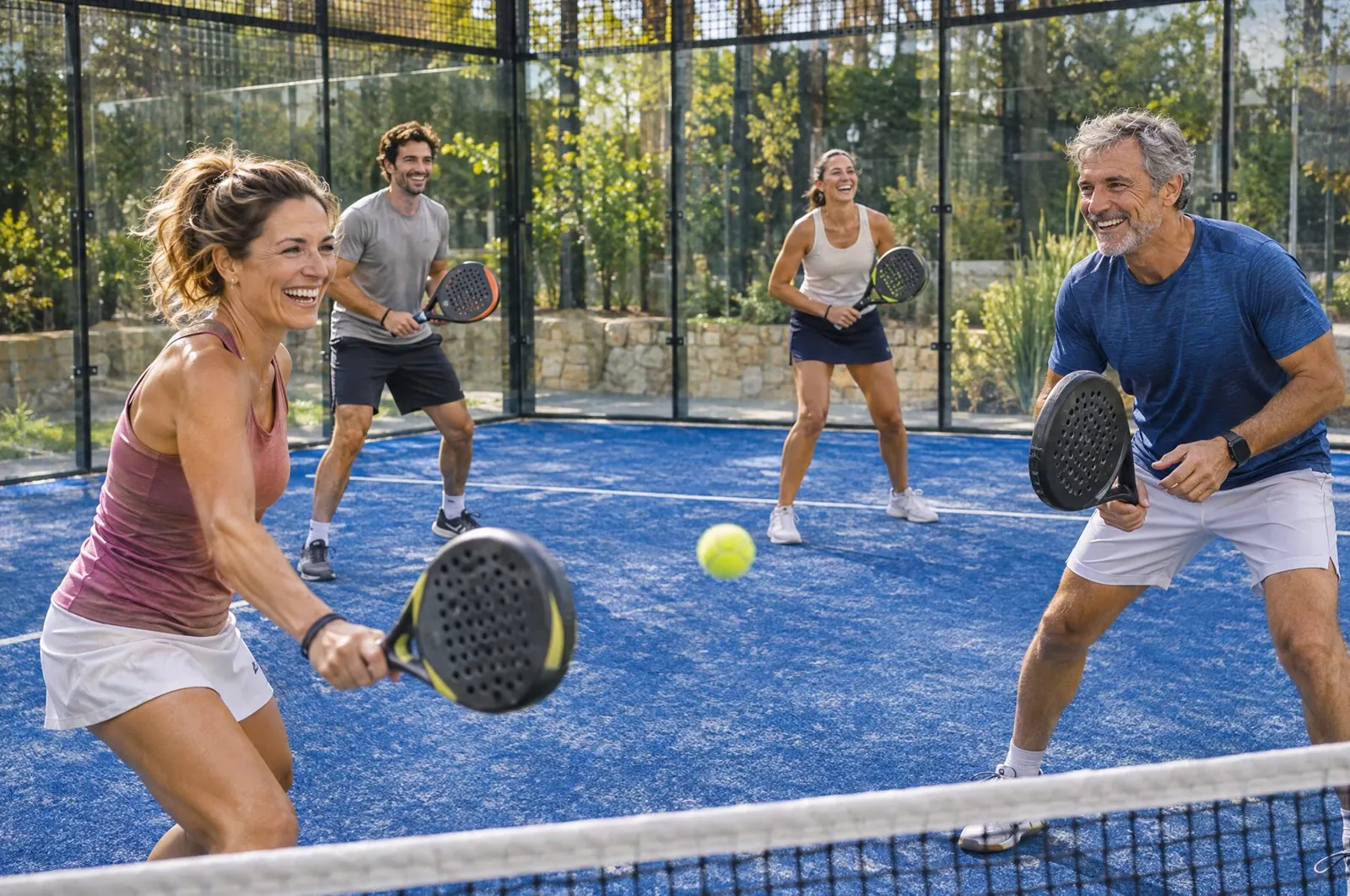
Padel is lower impact than many racket sports. The court is small, the ball is slower than in tennis, the sand-filled artificial turf softens each step, and doubles means you cover less ground. But it still involves short sprints, quick stops and twisting, so it is best described as low to moderate impact rather than no impact at all.
Why padel is easier on the body
- Smaller court. A padel court is 20 by 10 metres and shared by four players, so you run less than in singles tennis.
- Slower ball. Padel balls have lower pressure than tennis balls, so rallies are less explosive.
- Softer surface. Most courts use artificial turf with a sand infill, which has more give than hard courts or a sports hall floor.
- Underarm serve. There is no big overhead serve, which reduces strain on the shoulder.
- Lighter racket and shorter swings. Compact strokes put less load on the arm than a full tennis swing.
Where the impact still comes from
Padel is not a gentle stroll. The main stresses are:
- Sudden stops and changes of direction, which load the knees and ankles.
- Twisting on a planted foot, a common cause of knee and calf strains.
- Repeated overheads, which can tire the shoulder.
- A tight grip or poor technique, which can lead to elbow pain.
Our guides to common padel injuries and avoiding padel elbow explain how to reduce the risks.
How does it compare?
Padel is generally gentler than running, squash or singles tennis, and more demanding than walking, swimming or cycling. For a closer look at the risk side, read is padel more dangerous than tennis.
Is padel suitable if you have joint problems?
Many people with stiff joints, or who are returning to sport after a break, find padel more manageable than other racket sports. If you have an existing knee, hip or back condition, check with your doctor or physiotherapist first. You do not need to be very fit to start either. See do you have to be fit to play padel.
How to keep padel low impact
- Wear padel shoes with a herringbone or omni sole that grips the turf without locking your foot. See the best padel shoes.
- Warm up properly. Try our padel warm-up routine.
- Play on well-maintained courts, where the sand infill is even.
- Choose a lighter racket and keep your grip relaxed.
- Build up gradually, starting with one or two games a week.
The bottom line
Padel is one of the more joint-friendly racket sports, but it is not completely low impact. With good shoes, a proper warm-up and sensible build-up, most people can play it comfortably for years.
Related questions
Is padel bad for your knees?
Padel is easier on the knees than many sports, but sudden stops and twists can strain them. Good shoes, a warm-up and leg strength help protect them.
Is padel good for older players?
Yes. The small court, slower ball and doubles format make padel popular with older players, though anyone with a health condition should check with a doctor first.
Is padel lower impact than pickleball?
They are similar. Both are played on small courts in doubles, although padel tends to involve more running because the ball stays in play off the walls.