

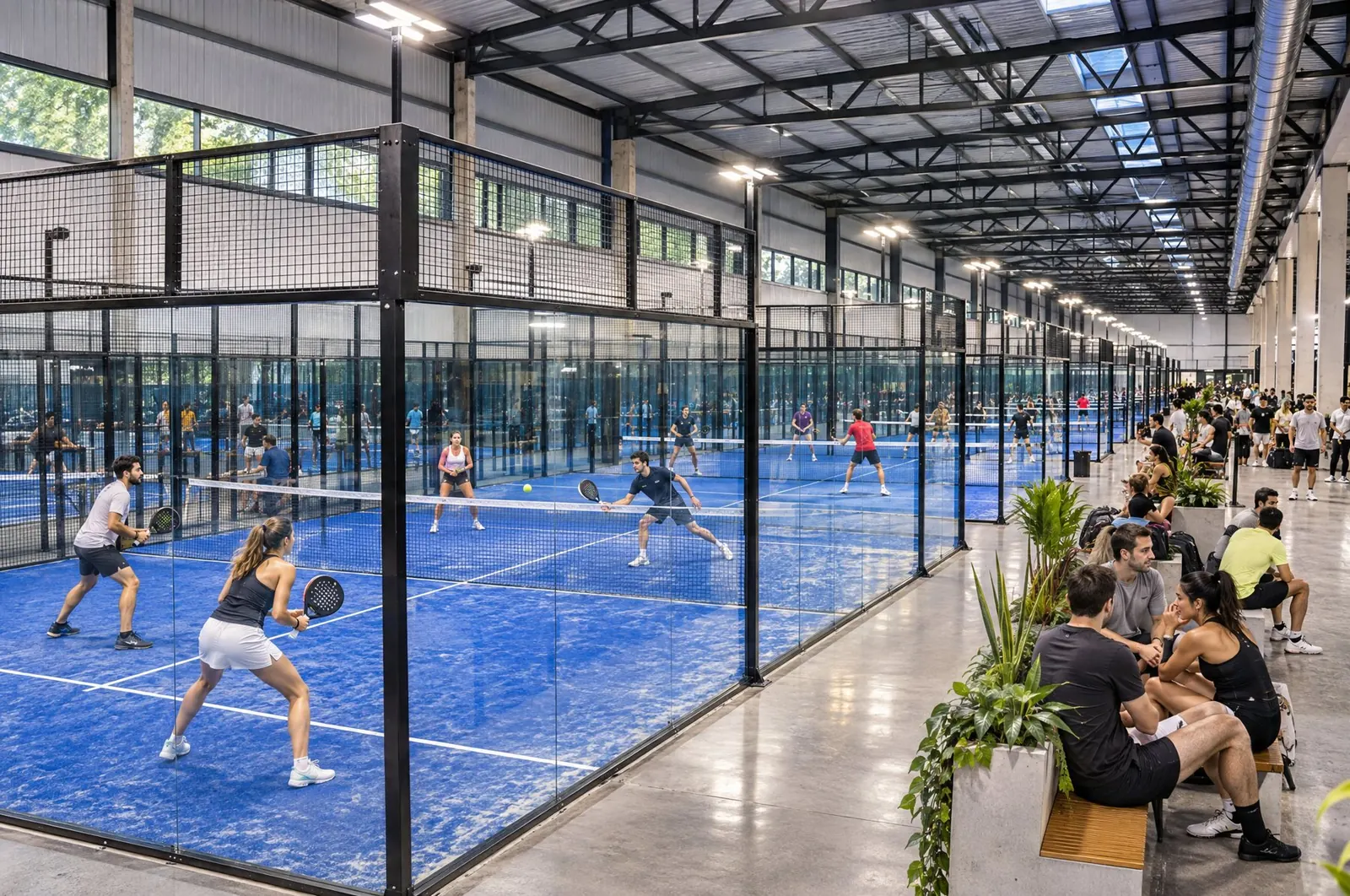
The evidence suggests padel is not a passing fad. Participation in Britain has grown from about 15,000 players in 2019 to around 1.5 million in 2026, with 2,445 courts at 682 venues. Growth will not stay this fast forever, and some markets have seen clubs close after overbuilding, but padel has been popular in Spain and Argentina for decades.
The numbers in Britain
The LTA's latest figures, published for World Padel Day in October 2026, show how quickly the sport has grown (LTA Padel):
- 2019: about 15,000 players.
- 2023: about 129,000 players.
- End of 2024: about 400,000 players.
- End of 2025: about 860,000 players.
- October 2026: around 1.5 million adults and juniors, playing on 2,445 courts at 682 venues.
That is one of the fastest rises of any sport in the country. The LTA also says publicly owned courts are being piloted with the UK Government, which would make padel easier to access outside commercial clubs.
Why padel is different from a fad
- It has a long history. Padel was created in Mexico in 1969 and has been a major sport in Spain and Argentina for decades. Read how padel began.
- It is easy to start. The underarm serve, the walls and the small court mean beginners can rally in their first session. See is padel easier than tennis.
- It is sociable. Doubles is the standard format, so it suits friends, couples and work groups.
- It has structure. National governing bodies, rankings, coaching pathways and professional tours give the sport a long-term base.
The warning from Sweden
Sweden is the example people point to when they ask whether padel is a fad. Court building boomed during the pandemic, and then many clubs struggled with too many courts, rising costs and falling bookings (Bloomberg, 2023). The sport did not disappear there, but the business side corrected sharply.
The lesson is that a sport can last while individual clubs still fail. Growth tends to slow as the market matures, and the best-run venues survive.
What could slow padel down in the UK
- Cost. Court hire can be expensive compared with some sports. See how much a game of padel costs.
- Weather. Outdoor courts are at the mercy of British weather, which pushes demand towards indoor venues.
- Planning and noise. Some proposed courts have faced objections from neighbours.
- Oversupply in some areas. If too many courts open in one town, some will struggle to fill.
So, is it here to stay?
All the signs point to yes. The current pace of growth will slow, and some clubs may close, but a sport with decades of history, a clear governing structure and well over a million players in Britain is not a craze. For more context, see how popular padel is in the UK.
Related questions
How many people play padel in the UK?
The LTA reported around 1.5 million adults and juniors playing padel in Britain in October 2026, on 2,445 courts at 682 venues.
Is padel growing or declining?
In Britain it is still growing quickly. Some other markets, such as Sweden, have seen club closures after a building boom, which shows growth can slow.
When was padel invented?
Padel was created in Acapulco, Mexico, in 1969, and spread to Spain and Argentina, where it has been popular for decades.