

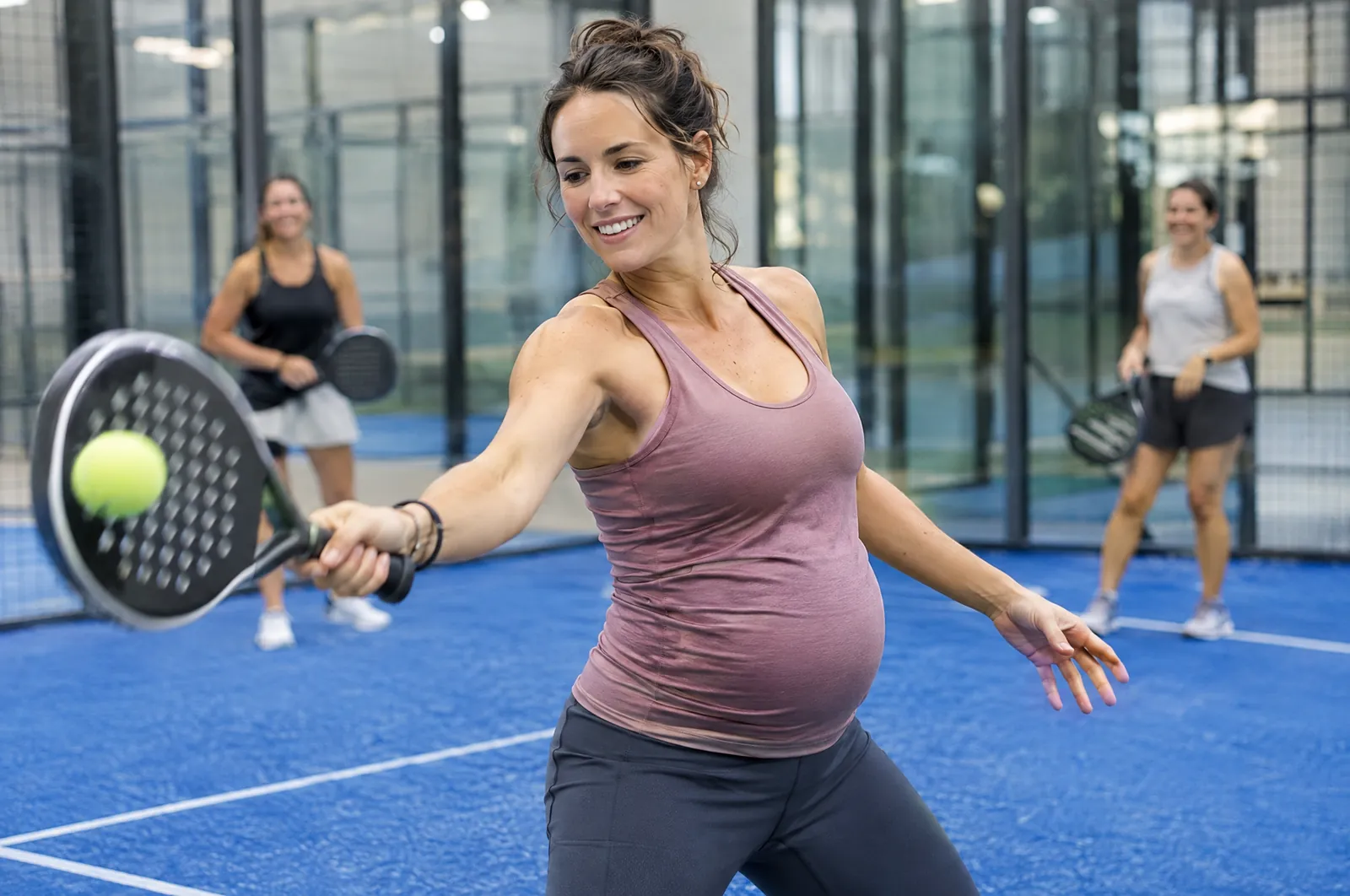
If you already play padel and your pregnancy is healthy and uncomplicated, gentle social padel is usually fine in early pregnancy, but check with your midwife or GP first. The NHS advises avoiding sports with a risk of falling or bumping your tummy, and padel has both, so most women scale back as the bump grows and stop full games later in pregnancy. It is not a good time to take up padel for the first time.
This guide is general information, not medical advice. Every pregnancy is different, so speak to your midwife or GP about your own situation.
What the NHS says about exercise in pregnancy
The NHS encourages staying active in pregnancy. It recommends the same 150 minutes a week of moderate activity as for all adults, and says activity can help with fitness, sleep, mood and preparing for birth. It also gives some clear limits:
- Do not start a new vigorous activity while pregnant.
- Avoid sports or activities where there is a risk of falling or bumping your tummy.
- Keep cool, drink water and stop if you feel uncomfortable, too hot or unwell.
Padel is not a contact sport, but it is fast, and falls and ball strikes do happen. That is why it sits in a middle ground: often fine early on for experienced players, less suitable as pregnancy goes on.
The specific risks in padel
- Falls. Quick turns off the back glass, lunges and sand-dressed turf all make slipping possible.
- Being hit by the ball. At the net, the ball arrives fast and at body height. Our guide on how fast a padel ball goes shows why.
- Racket clashes with your partner when you both go for the same ball.
- Looser joints. Pregnancy hormones relax the ligaments, which can make sprains more likely.
- Overheating, especially on indoor courts in warm weather.
How padel might change through pregnancy
Many women who keep playing adapt along these lines, with their midwife's agreement:
- Early pregnancy. Carrying on at your usual social level if you feel well, allowing for tiredness and nausea.
- Middle of pregnancy. Lower intensity, playing from the back of the court rather than the net, and skipping smashes and sharp turns.
- Later pregnancy. Most stop playing games and switch to gentle hitting, walking or swimming, as balance and movement become harder.
Ways to make padel safer
- Tell your partner and opponents, so everyone keeps the game relaxed.
- Play with people at or below your level, where rallies are gentler.
- Stay back from the net, where the ball comes fastest.
- Choose cooler times of day and take water breaks.
- Wear well-fitting padel shoes for grip.
Stop and contact your midwife if you feel dizzy, faint or short of breath, or have chest pain, tummy pain, bleeding, leaking fluid or reduced movements, and also if you fall or are hit by the ball.
The bottom line
Padel can be part of an active pregnancy if you already play, your pregnancy is uncomplicated and your midwife agrees. Keep the games gentle, stay away from the net and expect to step back as the bump grows. If you have never played, wait until after your baby arrives to start.
Related questions
Can I play padel in my first trimester?
If you already play, your pregnancy is uncomplicated and your midwife or GP agrees, relaxed padel is often fine early on. Listen to your body and keep it gentle.
Can I start playing padel when I am pregnant?
It is not recommended. The NHS advises against starting new vigorous activities in pregnancy, so it is better to wait until after the birth.
What should I do if I am hit by a padel ball while pregnant?
Stop playing and contact your midwife or maternity unit for advice, even if you feel fine.